
OSHA 2026 UpdatesOSHA 2026 Updates: What Manufacturers Need to Know About Heat, Safety Programs, and Enforcement
Post
Share This
OSHA 2026 UpdatesOSHA 2026 Updates: What Manufacturers Need to Know About Heat, Safety Programs, and Enforcement
Post

Learn how to conduct a Machine Safety Gap Assessment to identify machine guarding, lockout/tagout, training, and documentation gaps before they become OSHA citations or injuries.

Manufacturing equipment can create serious hazards when guarding, energy control, training, or maintenance practices are incomplete. A Machine Safety Gap Assessment helps identify those weaknesses before they lead to injuries, production delays, or OSHA citations.

For small and mid-sized manufacturers, the goal is not just to “check the box.” The goal is to understand where machine hazards exist, whether current safeguards are adequate, and what corrective actions should be prioritized.

OSHA’s machine guarding requirements are found in 29 CFR 1910 Subpart O, and OSHA’s general machine guarding rule requires one or more methods of guarding to protect operators and other employees from hazards such as point of operation hazards, ingoing nip points, rotating parts, flying chips, and sparks.

What Is a Machine Safety Gap Assessment?

A Machine Safety Gap Assessment is a structured review of machines, tasks, procedures, and employee exposure points to determine whether existing controls adequately protect workers.

It typically looks at:

  • Machine guarding
  • Lockout/tagout procedures
  • Energy isolation points
  • Operator tasks
  • Maintenance tasks
  • Setup, cleaning, and adjustment activities
  • Training records
  • Written procedures
  • Signage and warnings
  • Previous incidents or near misses

This type of review is especially valuable when equipment has been modified, relocated, purchased used, or operated for years without a formal safety review. The following steps will walk you through a machine safety gap assessment:
Start by creating a complete list of equipment in the facility. Include production machines, packaging equipment, conveyors, presses, saws, grinders, mixers, robotics, automated cells, and maintenance shop equipment.

For each machine, document:

  • Equipment name
  • Manufacturer
  • Model and serial number
  • Location
  • Department or production line
  • Primary operators
  • Maintenance responsibilities
  • Whether written lockout/tagout procedures exist

A Machine Safety Gap Assessment is much easier to manage when every machine is accounted for. Without an inventory, it is common for older or less frequently used machines to be missed.

Next, observe how each machine is used during normal operation and non-routine tasks. Do not limit the review to the operator’s standard cycle. Many serious injuries occur during clearing jams, cleaning, setup, troubleshooting, blade changes, die changes, lubrication, and maintenance.

Look for hazards such as:

  • Point-of-operation exposure
  • Ingoing nip points
  • Rotating shafts
  • Belts, pulleys, gears, and chains
  • Cutting, punching, bending, or shearing points
  • Stored pneumatic, hydraulic, mechanical, thermal, or electrical energy
  • Unexpected startup
  • Flying particles or sparks
  • Access to robot or automated motion areas

OSHA’s lockout/tagout standard applies to servicing and maintenance where unexpected energization, startup, or release of stored energy could injure employees.

Once hazards are identified, evaluate whether guards and safeguarding devices are present, functional, and appropriate.

Common gaps include:

  • Missing guards
  • Guards removed for convenience
  • Openings large enough for hand access
  • Poorly secured guards
  • Interlocks that are bypassed or defeated
  • Inadequate guarding at feed or discharge areas
  • Guards that create new pinch points
  • Lack of protection during maintenance or setup

A Machine Safety Gap Assessment should also verify that guards do not interfere with safe operation, visibility, or required maintenance. When guards are impractical or frequently removed, the issue may be poor design rather than employee behavior.

Machine safety and lockout/tagout are closely connected. A machine may be properly guarded during production but still create serious hazards during service or maintenance.

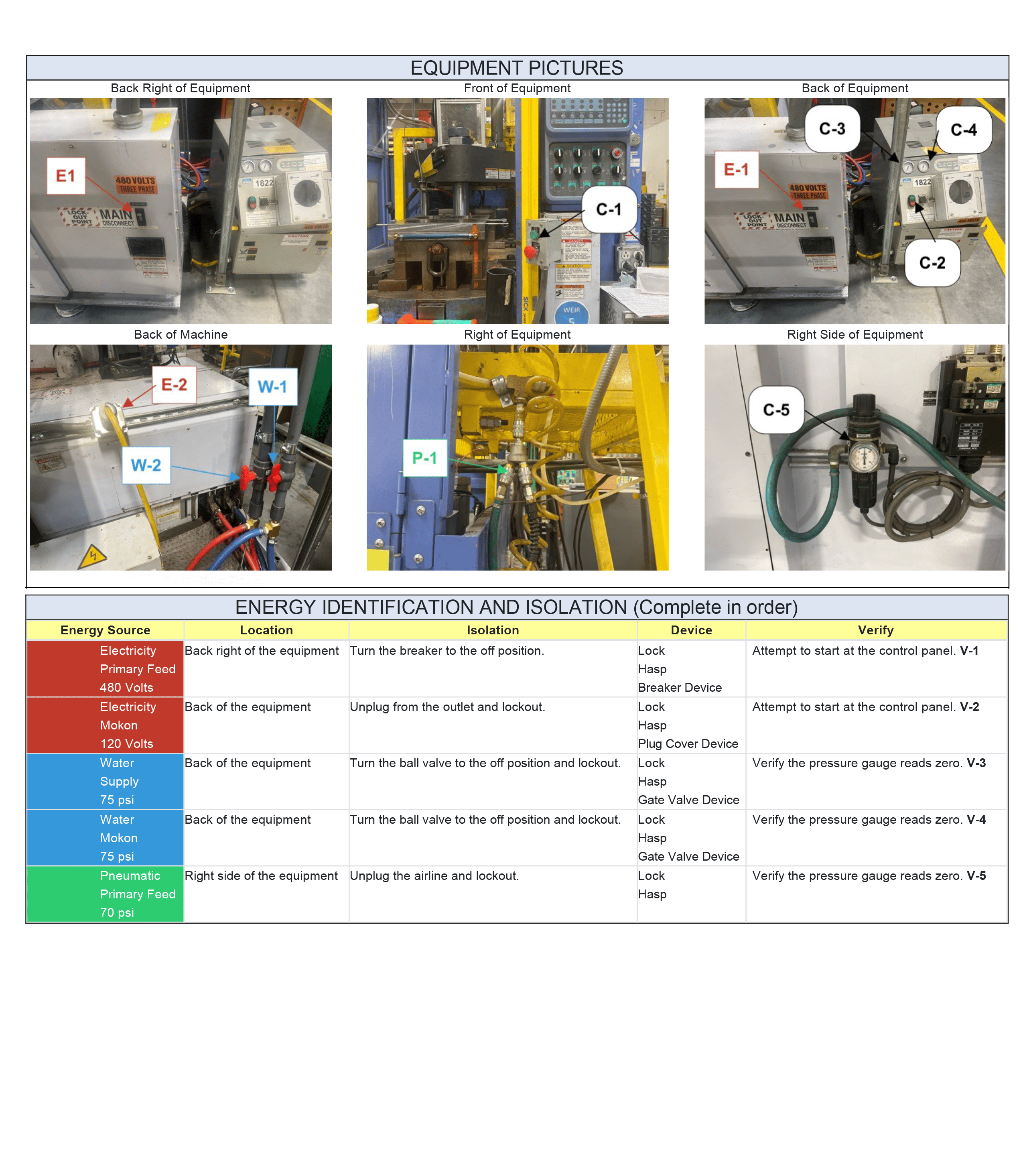
Review whether each machine has an equipment-specific lockout/tagout procedure. The procedure should identify:

  • All hazardous energy sources
  • Energy isolation devices
  • Steps to shut down the equipment
  • Steps to isolate and lock out each energy source
  • Stored energy release methods
  • Verification steps
  • Restart procedures

OSHA 1910.147 establishes minimum performance requirements for controlling hazardous energy during servicing and maintenance.

During the Machine Safety Gap Assessment, compare written procedures to the actual machine. If disconnects, valves, control panels, or energy sources have changed, the procedure may no longer be accurate.

Employees often know where the real risks are. Ask operators and maintenance personnel questions such as:

  • What tasks feel unsafe?
  • Are guards ever removed or bypassed?
  • Where do jams usually happen?
  • Which tasks require reaching into the machine?
  • Are lockout/tagout procedures easy to follow?
  • Have there been near misses?
  • Are there production pressures that conflict with safe operation?

This step is important because paperwork alone rarely tells the whole story. A good Machine Safety Gap Assessment includes both observation and employee input.

After field observations are complete, compare findings against OSHA requirements, manufacturer recommendations, company policies, and recognized safety practices.

For most general industry manufacturers, key OSHA references may include:

  • 29 CFR 1910 Subpart O for machinery and machine guarding
  • 29 CFR 1910.212 for general machine guarding requirements
  • 29 CFR 1910.147 for lockout/tagout
  • Equipment-specific standards depending on the machine type

The NIOSH Hierarchy of Controls is also helpful when deciding how to correct hazards. It ranks controls from most effective to least effective: elimination, substitution, engineering controls, administrative controls, and PPE.

Not every issue carries the same level of risk. Prioritize corrective actions based on severity, likelihood, employee exposure, and frequency of the task.

High-priority findings may include:

  • Exposed points of operation
  • Unguarded rotating parts
  • Missing lockout/tagout procedures
  • Bypassed interlocks
  • Tasks requiring employees to reach into energized equipment
  • Known near-miss locations
  • Machines with previous injury history

A Machine Safety Gap Assessment should produce a clear action plan, not just a long list of observations.

For each gap, assign:

  • Corrective action
  • Responsible person
  • Target completion date
  • Interim control, if needed
  • Final verification method
  • Completion status

Examples of corrective actions include installing fixed guards, updating lockout/tagout procedures, replacing damaged interlocks, adding energy isolation labels, retraining employees, or redesigning access points.

When possible, favor engineering controls over administrative controls or PPE. PPE and warnings may still be necessary, but they should not be the only protection where a serious machine hazard exists.

After corrective actions are complete, verify that the hazard has actually been controlled. Do not assume that purchasing a guard, writing a procedure, or holding a training session automatically solves the problem.

Verification may include:

  • Re-inspecting the machine
  • Watching the task being performed
  • Testing interlocks or safeguarding devices
  • Confirming lockout/tagout steps
  • Reviewing employee understanding
  • Updating photos, procedures, and records

Documentation is critical. A well-documented Machine Safety Gap Assessment can help demonstrate that the company identified hazards, prioritized risk, and took corrective action.

Machine safety is not a one-time project. Equipment changes, production demands, staffing changes, and maintenance modifications can all create new hazards.

Consider reassessing machines when:

  • New equipment is installed
  • Existing equipment is modified
  • A process changes
  • A near miss or injury occurs
  • Guards are removed or damaged
  • New tasks are assigned
  • Lockout/tagout procedures are updated
  • Annual safety reviews are conducted

A recurring Machine Safety Gap Assessment helps keep the safety program current and reduces the chance that hazards will go unnoticed.

Final Thoughts

A Machine Safety Gap Assessment gives manufacturers a practical way to find and fix machine hazards before they result in injuries, downtime, or OSHA citations. The best assessments combine field observation, employee input, regulatory review, and a realistic corrective action plan.

For safety consultants, this service can also be a strong entry point for helping clients with machine guarding, lockout/tagout procedures, safety training, and OSHA readiness.

The key is to make the assessment actionable. Identify the hazards, rank the risk, assign responsibility, and verify completion. That is how a machine safety review becomes a meaningful safety improvement instead of just another report.