

A fatal lockout tagout manufacturing plant accident happened in seconds. Learn what went wrong, how LOTO prevents fatalities, and what to fix now.
Worker killed during machine sanitation at New Jersey processing plant: the kind of tragedy LOTO is designed to stop
A lockout tagout manufacturing plant accident is one of the most devastating events a facility can face—because the underlying cause is often preventable. When hazardous energy isn’t properly isolated, a machine that appears “off” can suddenly move, cycle, or release stored energy during cleaning, clearing jams, or maintenance. Those few seconds can change a family forever.
In late 2025, federal investigators publicly tied a worker’s death at a Swedesboro, New Jersey vegetable processing facility to a breakdown in hazardous energy control—specifically, missing or ineffective lockout/tagout (LOTO) protections during cleaning and sanitation work.
While the public releases don’t share every detail of the fatal event, the takeaway is painfully clear: sanitation and maintenance tasks are high-risk moments for unexpected energization, and a functioning LOTO program exists to prevent exactly that.
What happened (based on publicly available reporting)
According to the U.S. Department of Labor/OSHA, a worker was fatally injured while cleaning and sanitizing a machine at Taylor Farms New Jersey Inc.’s processing facility in Swedesboro. OSHA opened an inspection in May 2025 after being notified of the fatality and later alleged the company failed to implement proper lockout/tagout procedures to protect workers during sanitation activities.
OSHA proposed $1,125,484 in penalties for Taylor Farms, citing 16 violations tied to lack of LOTO procedures, failure to implement LOTO requirements, and failure to provide training. OSHA also cited the on-site temporary staffing agency (People Logistics) for allegedly not implementing or training workers on LOTO procedures, proposing an additional $33,100 in penalties.
Industry coverage echoed the same core finding: the fatality occurred during machine cleaning/sanitation, and the enforcement action centered on systemic LOTO failures
How a LOTO program could have prevented this outcome
Because OSHA’s public release does not provide step-by-step mechanics of the fatal event, we can’t claim the exact failure mode (e.g., which energy source re-energized). But OSHA does state the fatality was connected to a failure to implement proper LOTO protections during sanitation.
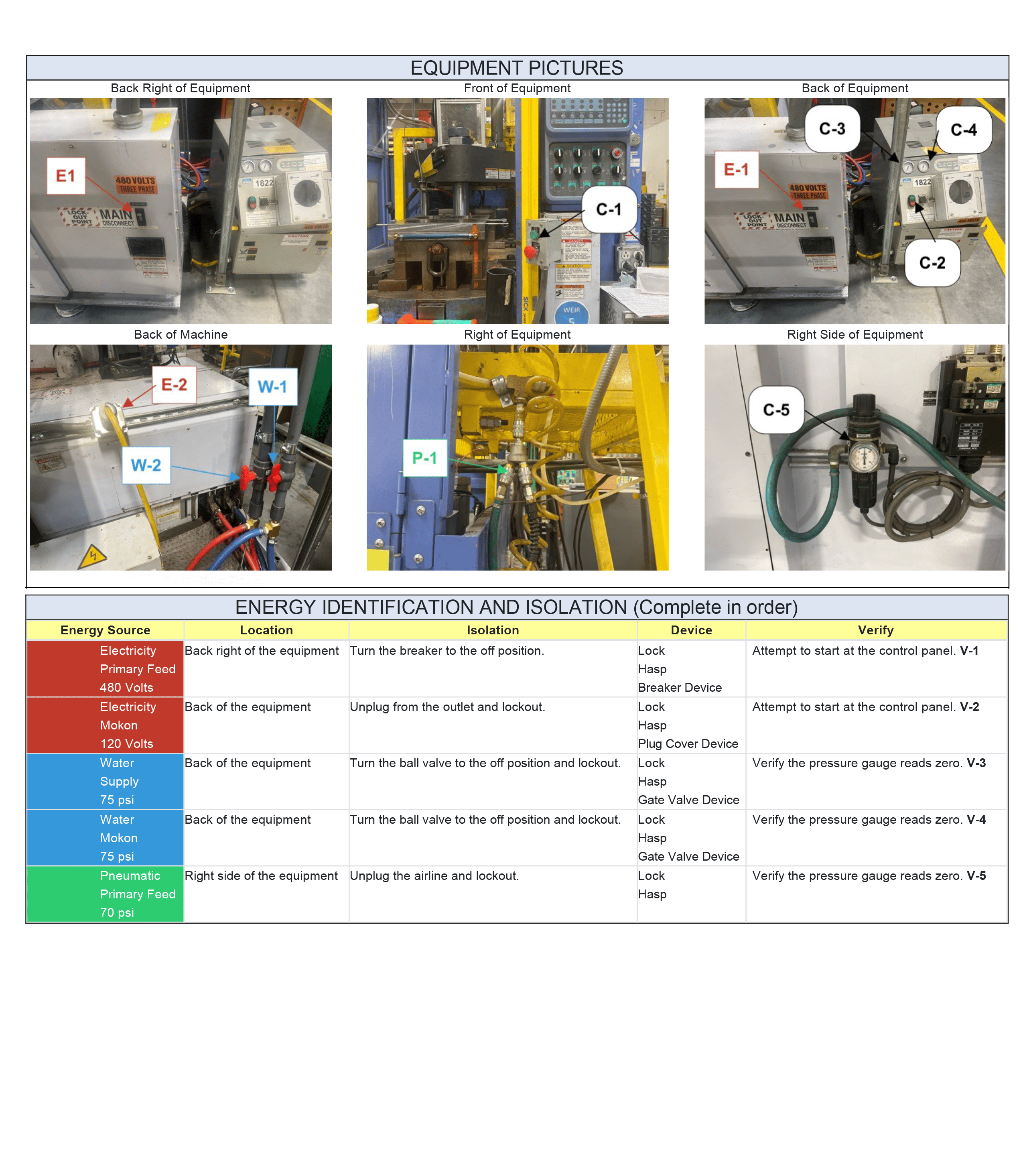
A robust LOTO system doesn’t rely on memory or “common sense.” It relies on repeatable, auditable controls. Here’s what prevents a lockout tagout manufacturing plant accident in the real world:
What plant managers can do this week
If you manage a facility, you don’t need a major incident to justify action. Use this quick check to reduce the likelihood of a lockout tagout manufacturing plant accident:
-
Do our highest-risk machines have current, machine-specific LOTO procedures?
-
Are isolation points labeled, accessible, and standardized?
-
Do we control stored energy (bleed-down, block, release, test)?
-
Do teams consistently perform verify/try steps?
-
Are sanitation tasks clearly defined as LOTO-required when guards are opened or danger zones are entered?
-
Are temps/contractors fully included in our process?
-
Do we perform periodic inspections of procedures and retrain when gaps are found?
LOTO Program Assessment for Plant Managers
If you’re concerned about experiencing a lockout tagout manufacturing plant accident at your facility, the fastest path to confidence is an outside review that identifies blind spots before they become incidents.
Smart Safety Pro LOTO Program Assessment:
-
Verify machine-specific procedures for your most hazardous equipment
-
Identify sanitation and maintenance tasks that must trigger LOTO
-
Evaluate lock hardware, group lockout readiness, and isolation-point labeling
-
Review training effectiveness for authorized/affected employees and contractors
-
Provide a prioritized, plant-ready action plan (quick wins + long-term fixes)