
Let’s dive into lockout tagout during shutdowns, and learn why shutdown season can become one of the most dangerous times for hazardous energy exposure.
Planned outages are supposed to improve safety. Equipment is taken offline, maintenance teams gain access, repairs can be completed, and long-postponed issues finally get attention. But in many facilities, the period that should be the most controlled becomes one of the most hazardous. That is why lockout tagout during shutdowns deserves much more attention from plant leaders, maintenance supervisors, and safety professionals.
During normal production, people usually work within established routines. Operators know their machines. Maintenance teams understand the daily rhythm of the facility. Supervisors are used to the pace and flow of work. During a shutdown, that predictability disappears. Multiple systems may be down at once. Contractors may be on site. Guards may be removed. Equipment may be tested, re-energized, and isolated again several times in the same shift. In that environment, even a strong energy control program can be tested.
OSHA’s hazardous energy control requirements exist because servicing and maintenance create serious risk when equipment can unexpectedly start up or release stored energy. The danger is not limited to electrical sources. Hazardous energy can also include hydraulic pressure, pneumatic pressure, spring tension, thermal energy, gravity, or residual movement. That is what makes lockout tagout during shutdowns such an important topic for manufacturers that rely on complex equipment and fast maintenance turnarounds.
Why shutdowns create more LOTO risk
The problem is not that shutdown work is inherently careless. The problem is that shutdown work creates conditions where mistakes become more likely. Speed increases. Communication gets more complicated. Equipment is no longer in its normal operating state. Multiple departments may be involved in the same task. Even a company with a written energy control program can struggle when real-world shutdown conditions begin to stack up.
One of the biggest reasons lockout tagout during shutdowns becomes difficult is pressure. Downtime is expensive. Every hour of lost production matters. Maintenance leaders feel pressure to finish quickly. Operations wants assets running again. Contractors are scheduled tightly. Under those conditions, people are more likely to assume that someone else already isolated the equipment, already verified zero energy, or already released stored pressure. That is where breakdowns begin.
Another reason shutdowns are dangerous is the number of people involved. A single machine may involve an operator, a maintenance technician, an electrician, a supervisor, and an outside contractor. If responsibilities are not clear, one person may believe a lockout is still in place while another believes the machine is ready for testing or restart. Strong lockout tagout during shutdowns depends on more than locks and tags. It depends on communication, verification, and role clarity.
The real issue is often execution, not paperwork
Most facilities do not believe they have a lockout/tagout weakness. They have procedures. They have devices. They have training records. They may even have annual audits on file. The problem is that shutdown work reveals whether those systems actually function in the field.
A written procedure is only useful if it matches the equipment as it exists today. A lock is only useful if the correct isolation point is identified. Training is only useful if employees can apply it under time pressure. This is why lockout tagout during shutdowns often exposes the difference between compliance on paper and control in practice.
In many plants, machine-specific procedures have not been updated after modifications, repairs, or line changes. Disconnects may not be labeled clearly. Stored energy may not be fully addressed. The procedure may technically exist, but it may not reflect what employees face during an outage. Shutdown work does not create those weaknesses. It reveals them.
Common failure points during plant shutdowns
There are several predictable places where shutdown risk increases.
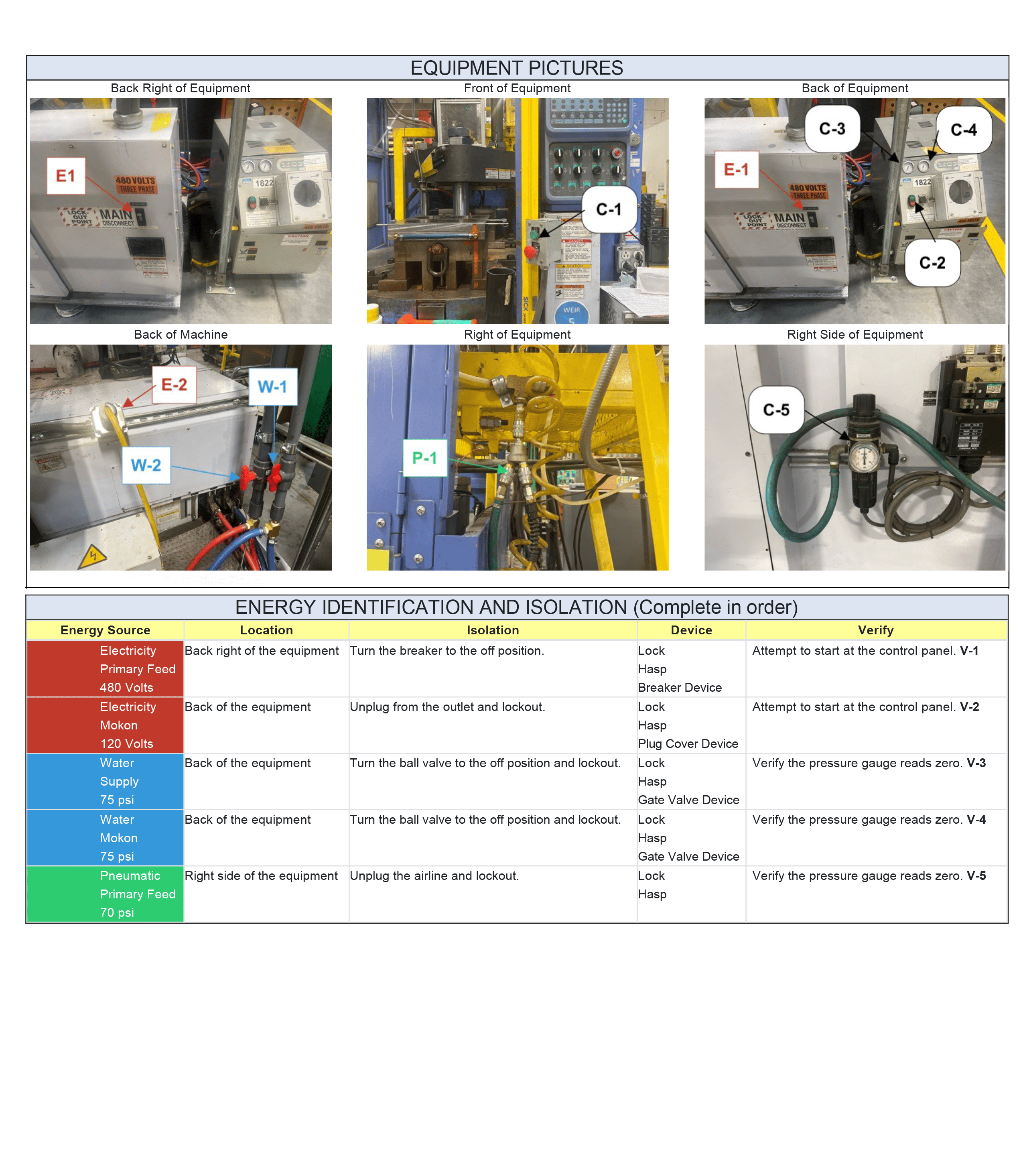
The first is incomplete isolation. Workers may shut off primary power but overlook a secondary source such as air pressure, hydraulic force, stored mechanical energy, or gravity. The second is poor verification. A disconnect may be opened and locked, but nobody confirms that the machine is actually at zero energy. The third is temporary re-energization for testing. Unless that step is controlled carefully, it can create confusion about whether the system is safe to approach. Each of these issues makes lockout tagout during shutdowns far more vulnerable to error.
Contractor coordination is another major concern. Many shutdowns involve outside specialists who may bring their own methods, devices, and expectations. If the host employer and contractor are not aligned, gaps can appear quickly. One party may assume the other is controlling the hazardous energy, while in reality no one has full control. That is why facilities should review responsibilities before outage work begins rather than after a close call.
Restart also creates risk. Much of the conversation around energy control focuses on isolation, but the return to service matters just as much. Before startup, teams need to confirm that all employees are clear, tools have been removed, guards are reinstalled where appropriate, and each authorized employee has removed their own lock according to procedure. Effective lockout tagout during shutdowns has to cover the full cycle, not just the moment equipment is turned off.
Why recent enforcement matters
Recent OSHA enforcement activity reminds employers that hazardous energy control continues to receive serious attention. In March 2026, OSHA announced citations against Alpha Baking Co. in Illinois that included repeat violations tied to lack of lockout/tagout training and failure to lock out machinery during servicing. That case is a timely reminder that regulators do not view LOTO as a minor documentation issue. They view it as a life-critical control.
That is part of what makes lockout tagout during shutdowns such a valuable article topic right now. Manufacturers can see themselves in this problem. It is not obscure. It is not theoretical. It is the kind of risk that shows up during routine maintenance, planned outages, and restart activity in facilities across the country.
What good looks like
Facilities that manage outages well usually do a few things consistently. They review machine-specific procedures before the shutdown begins. They confirm all energy sources, including stored and secondary energy. They make sure authorized employees understand exactly how to isolate, lock, dissipate, verify, and restore equipment safely. They coordinate closely with contractors. They define how testing and temporary energization will be handled. Most importantly, they treat energy control as a field process rather than a paperwork exercise.
This is where lockout tagout during shutdowns becomes a leadership issue, not just a maintenance issue. Managers set the pace. Supervisors reinforce expectations. Safety professionals help ensure the process is accurate and current. If leadership sends the message that the outage schedule matters more than verification, employees will notice. If leadership makes it clear that restart happens only after every step is complete, the culture becomes stronger.
The hidden cost of weak lockout tagout during shutdowns
The worst-case outcome is obvious: severe injury or death. But even when no one gets hurt, weak shutdown control creates serious business consequences. Near misses trigger investigations, delays, confusion, and loss of confidence. Equipment can be damaged. Work can be repeated. Teams can spend more time trying to recover from mistakes than they would have spent doing the job correctly the first time.
That is why lockout tagout during shutdowns should not be treated as a narrow compliance topic. It is a production issue, a maintenance issue, and a risk management issue. A shutdown that goes smoothly protects people, reduces confusion, and helps the plant return to operation with confidence. A shutdown with weak energy control can do the opposite.
Final thought
Shutdowns are when many facilities discover whether their lockout/tagout program is genuinely effective or merely assumed to be effective. The pace is faster, the conditions are more complex, and the margin for error is smaller. Those realities make lockout tagout during shutdowns one of the most important safety priorities in any manufacturing environment.
The lesson is simple. Outages do not invent hazardous energy failures. They expose them. If a company wants safer maintenance work, smoother restarts, and fewer costly mistakes, then lockout tagout during shutdowns must be planned, verified, and enforced with the same discipline as any other critical production control.