
Learn how to improve your lockout tagout annual audit process, identify compliance gaps, and strengthen hazardous energy control in manufacturing facilities.
For many manufacturers, lockout tagout compliance starts strong and slowly turns into a paperwork exercise. Procedures are written, locks are issued, and training is completed. Then the annual audit comes around and exposes a familiar problem: the program may appear complete on paper, but weaknesses still exist on the floor.
A strong lockout tagout annual audit should do more than satisfy a requirement. It should help employers verify that hazardous energy is being controlled effectively, machine-specific procedures remain accurate, and authorized employees are following the process correctly.
Too often, however, annual audits fail to uncover the issues that matter most.
What a Lockout Tagout Annual Audit Is Really Meant to Do
A lockout tagout annual audit is supposed to confirm that the energy control program is functioning in the real world, not just in binders or digital files.
It should answer several important questions:
Are the written procedures still accurate for the equipment being serviced?
Are authorized employees following the documented steps?
Have equipment changes introduced new hazards?
Are verification practices strong enough to confirm zero energy?
Are deficiencies being identified and corrected?
When the audit becomes a routine signoff, those questions are often left unresolved.
Why Annual Audits Often Fall Short
What a Better Lockout Tagout Annual Audit Looks Like
A more effective lockout tagout annual audit is practical, field-focused, and tied directly to real servicing activities.
Observe actual lockout tagout activity
Whenever possible, audits should be performed while employees are carrying out real servicing or maintenance work. This gives the reviewer a much more accurate view of how procedures are actually being used.
Compare the written procedure to the machine
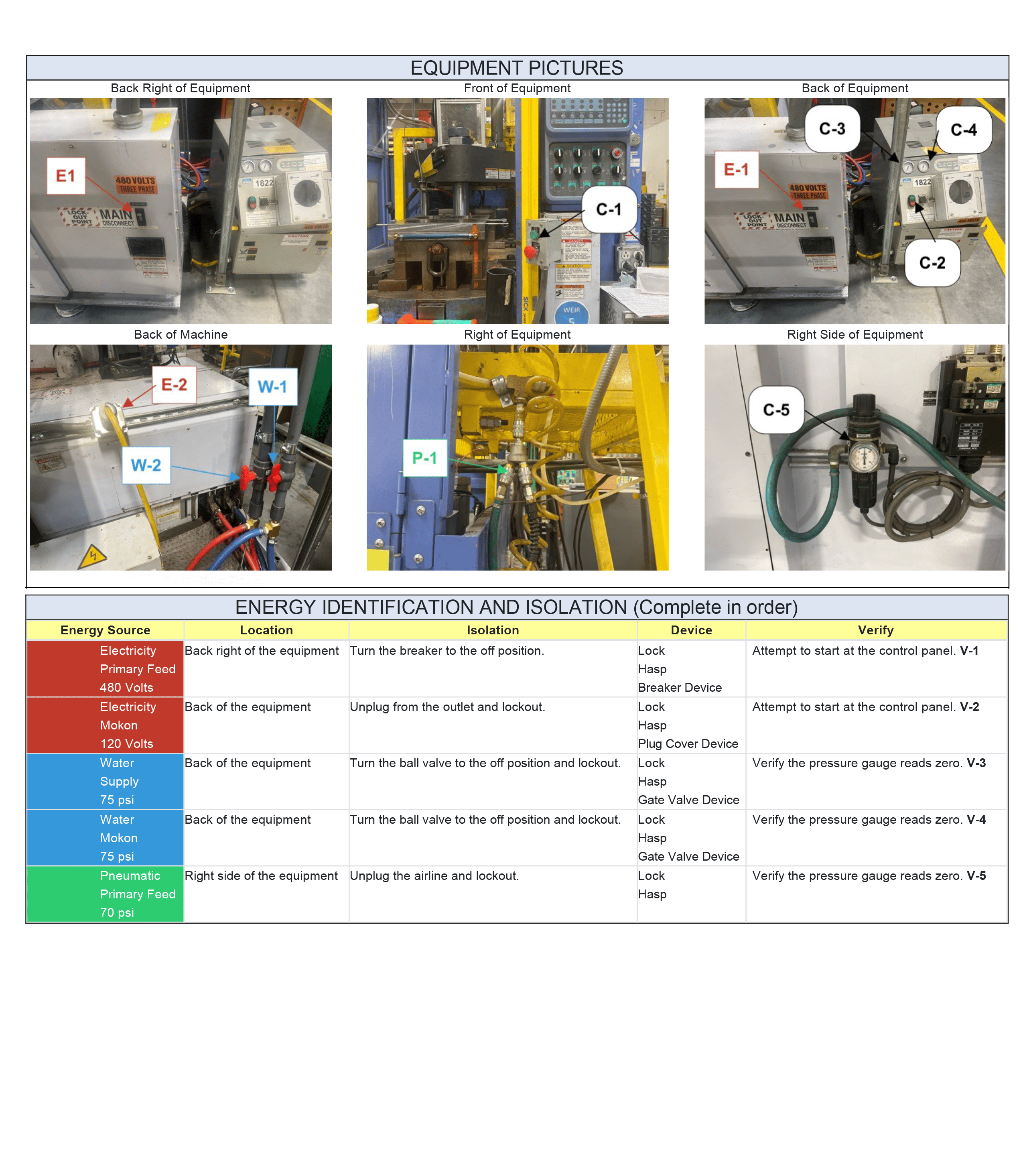
The audit should verify that all energy sources, shutdown steps, isolation points, and verification methods listed in the procedure still match the equipment in the field.
Evaluate employee understanding
Ask the authorized employee to explain the process while performing it. This helps confirm they understand the hazards, not just the sequence of steps.
Review the quality of the procedure itself
A procedure may be technically correct but still difficult to use. If it is too vague, too generic, or outdated, employees may skip steps or rely on memory. An audit should identify where procedures need better detail, better formatting, or more machine-specific information.
Track corrective actions to completion
Every deficiency found during the annual audit should lead to a documented correction. That may include updating a procedure, retraining employees, improving labeling, or changing the way a task is performed.
Common Red Flags During an Annual Audit
During a lockout tagout annual audit, several warning signs often point to deeper program weaknesses:
- Procedures that appear copied from one machine to another
- Missing or weak verification steps
- Employees working from memory instead of the written procedure
- Poor identification of isolation points
- Inconsistent group lockout practices
- Outdated photos or incomplete machine-specific instructions
- Repeated findings from previous audits
These are common indicators that the LOTO program needs more than a yearly review. It needs stronger maintenance and ownership throughout the year.
How Manufacturers Can Strengthen the Audit Process
For small and mid-sized manufacturers, improving the lockout tagout annual audit process usually does not mean adding more forms. It means improving how the review is performed.
Focus on high-risk equipment first. Prioritize machines with multiple energy sources, frequent servicing needs, repeated jams, or a history of procedure changes. Make sure the person conducting the audit is competent and understands both the written program and the actual machine hazards.
It also helps to standardize the audit process across departments or facilities. When different people evaluate LOTO in completely different ways, the results become inconsistent and hard to act on.
Why the Annual Audit Matters
A lockout tagout annual audit is not just about OSHA compliance. It is a chance to identify outdated procedures, weak work practices, and employee misunderstandings before they contribute to a serious injury.
For manufacturers, that means better protection for employees and a stronger energy control program. For safety consultants and service providers, annual audits create opportunities to deliver value by uncovering gaps, updating procedures, and improving implementation in the field.
Final Thought
If your lockout tagout annual audit feels rushed, repetitive, or purely administrative, it is probably missing its true purpose. The goal is not just to prove that the audit happened. The goal is to confirm that hazardous energy is being controlled properly every time service or maintenance work is performed.
When done well, the annual audit becomes one of the most useful tools in the entire lockout tagout program.
Want to learn more about what our LOTO software can do and how it can streamline your annual audits? Schedule a demo to talk with one of our specialists.