
Lockout tagout programs generate valuable information every day—but in many organizations, that information is never fully used.
With digital lockout tagout software, every lockout event produces structured lockout tagout data that can be analyzed, reported, and acted on. When captured correctly, lockout tagout data goes far beyond compliance and becomes a powerful tool for improving maintenance planning, employee training, and overall safety performance.
When they turn routine LOTO activities into reliable data, safety and maintenance teams gain visibility into what is really happening on the factory floor—and how to make the program better over time.

Why Lockout Tagout Data Matters More Than Ever
Traditional, paper-based LOTO programs provide little insight once a lockout is complete. Forms are filed away, audits are time-consuming, and trends are difficult to identify. In contrast, data collected digitally creates a living record of energy control activity.
This data helps organizations:
-
Understand how equipment is being locked out and returned to service
-
Identify patterns in machine downtime
-
Improve training using real-world execution data
-
Strengthen accountability across the LOTO program
How Digital Lockout Tagout Data Is Captured Automatically
When a lockout is completed using a digital LOTO app, the system automatically updates the machine or asset record. Each event captures consistent lockout tagout data, including:
-
Lockout date and time
-
Return-to-service date and time
-
Authorized employee who performed the work
-
Equipment or machine involved
Because this data is recorded automatically, it eliminates manual entry errors and ensures every LOTO event is documented the same way—every time.
Using Digital LOTO Data to Understand Machine Downtime
One of the most valuable uses of lockout tagout data is analyzing equipment downtime. Since both lockout and return-to-service actions are time-stamped, safety and maintenance teams can generate reports that show:
-
How often machines are locked out
-
How long equipment remains out of service
-
Downtime trends by machine, department, or shift
These insights help maintenance leaders make informed decisions about preventive maintenance, staffing, and equipment reliability.
Lockout Tagout Data and Periodic Inspection Tracking
Digital LOTO systems also use lockout tagout data to automatically track periodic inspection requirements. Instead of relying on calendars or spreadsheets, the software continuously monitors inspection due dates.
Program managers gain instant access to:
-
Due and overdue periodic inspections
-
Filtered views by equipment, location, or procedure
-
Clear documentation for audits and compliance reviews
This improves inspection consistency while reducing administrative effort.
Capturing Rich Field-Level Data
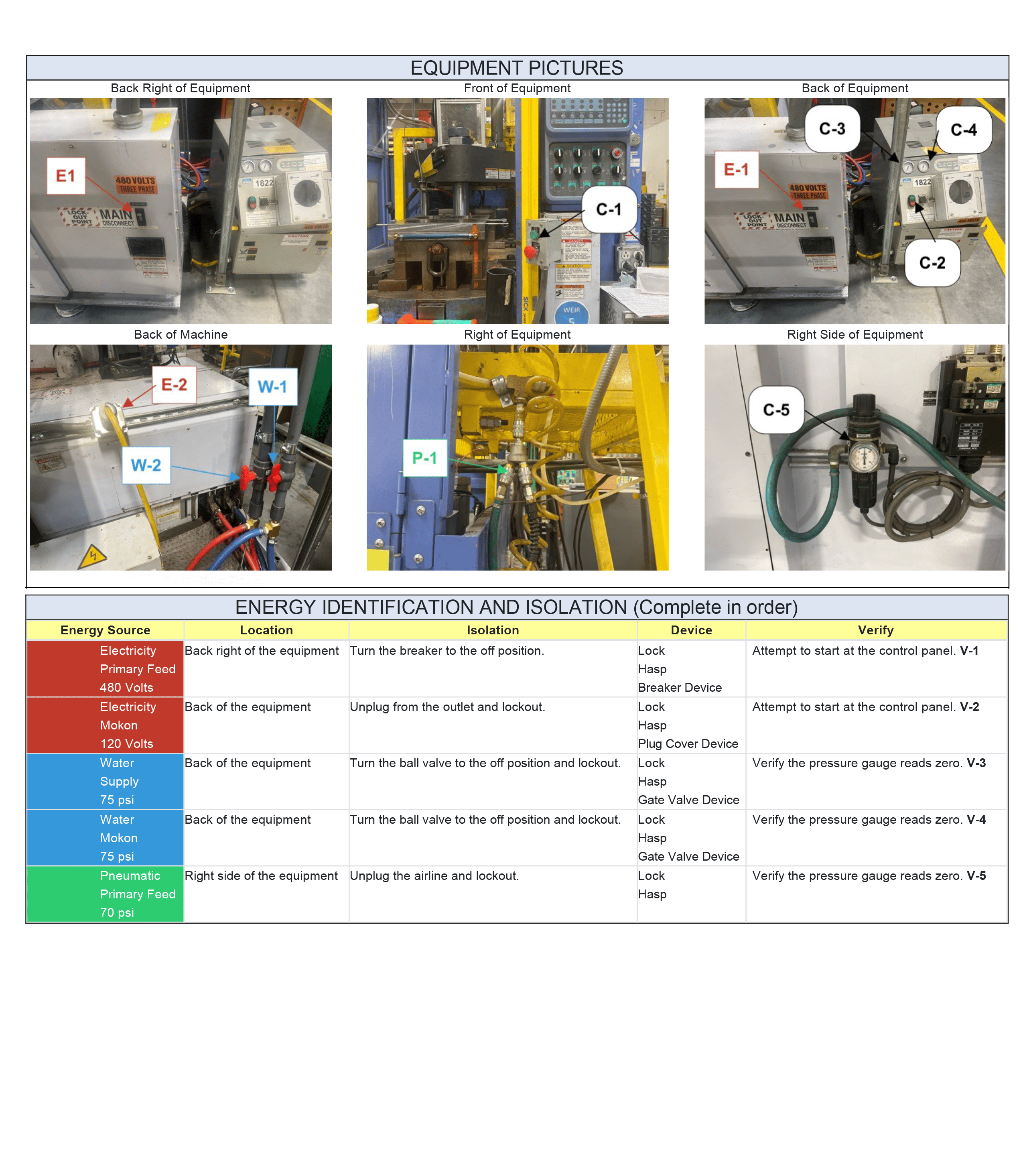
Authorized employees can add notes and images directly within the lockout process. This enhances lockout tagout data by capturing real-world conditions that are often missing from manual processes.
Notes and images are included in LOTO completion reports, providing:
-
Context for unusual conditions or delays
-
Visual confirmation of lock placement
-
Insight into procedural challenges on the factory floor
This data helps safety teams understand how procedures are actually performed, not just how they are written.
Customizing Lockout Tagout Steps for Stronger Validation
Digital LOTO platforms allow organizations to customize data collection to fit their program needs. Additional process data points can be required, such as:
-
Scanning energy source QR codes for double validation
-
Requiring photos of applied locks or tags
-
Confirming critical steps before proceeding
These requirements strengthen compliance while producing higher-quality data for reporting and analysis.
Using Data to Improve Training and Program Performance
When analyzed over time, lockout tagout data becomes a powerful improvement tool. Safety and maintenance leaders can:
-
Identify procedures that require clarification or retraining
-
Use real LOTO examples in safety training
-
Detect recurring issues with specific machines
-
Continuously refine procedures based on field feedback
This data-driven approach allows organizations to improve proactively rather than reacting to incidents or audit findings.
LOTO Data Supports Continuous Improvement
Digital LOTO data provides program managers with visibility into day-to-day operations that was never possible with paper systems. With consistent, detailed reporting, LOTO programs evolve into dynamic safety systems that improve over time.
Organizations that leverage digital data can enhance maintenance efficiency, strengthen training, and build safer, more reliable operations.